
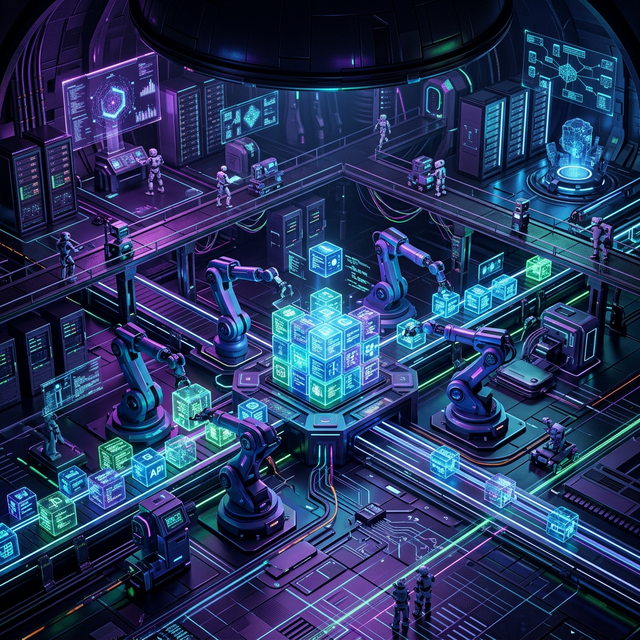
The landscape of software development has undergone a tectonic shift as we move into 2026. The days when building a software-as-a-service (SaaS) product required a team of twenty engineers and six months of development are officially over. We are now in the age of AI-Orchestrated Development, and at GenXEmpire.com, we are training the next generation of "Solo-preneurs" to dominate this market.
Chapter 1: Why 2026 is the Year of the Micro-SaaS
In 2026, the real wealth is being built in the specialized corners of the internet. Micro-SaaS applications—tools that solve one specific problem for one specific audience—are more profitable than ever. Why? Because the maintenance cost has dropped significantly due to AI. Unlike enterprise software which is bulky and slow to update, a Micro-SaaS can be pivoted in days based on user feedback.
- Efficiency: AI-assisted coding tools like Bolt.new and advanced LLMs can now handle 90% of the boilerplate code. Foundation models have become so advanced that they can anticipate high-level architecture decisions.
- Scalability: Cloud infrastructures have become autonomous. Using serverless functions and modern edge computing, your app can handle 10,000 users one day and 1 million the next without manual server management.
- Niche Targeting: Users are looking for tailored solutions. Instead of a generic "CRM," they want an "AI CRM for Independent Dental Clinics in North America." This specificity is where the high-ticket subscriptions are hidden.
Chapter 2: The Technology Stack for the Modern SaaS Founder
To build a million-dollar app by yourself, you need to master the right stack. At GenXEmpire, we focus on the "Trinity of Speed":
- The Frontend: Next.js 16. Utilizing sophisticated Server Components (RSC) for instant load times and perfect SEO. In 2026, if your app takes more than 500ms to load, you’ve lost 40% of your traffic.
- The Backend: Python & Node AI Agents. Python acts as the heavy-lifter for AI processing, while Node.js handles the high-speed real-time data flow.
- The Database: Vector-native & Real-time. Databases like Supabase or Pinecone that can store and retrieve AI memory (embeddings) instantly. This allows your app to "remember" every user interaction and personalize the experience.
The Autonomous Agent Layer: The 2026 Standard
The most successful SaaS apps in 2026 don’t just provide a dashboard; they perform tasks. Imagine a SaaS that not only tracks your inventory but automatically orders new stock when it detects a trend in your sales data. This is what we call "Active SaaS." We teach you how to build these agents using frameworks like LangChain and AutoGPT-9.
Chapter 3: How to Validate Your SaaS Idea (The GenX Method)
Validation is the difference between a successful launch and a waste of time. Most developers fail because they build first and ask later. At GenXEmpire, we teach the "Landing Page First" approach:
- Step 1: The Friction Audit. Identify a pain point in a high-value industry. Look at Reddit, Twitter, and specialized forums where people are complaining about existing slow tools.
- Step 2: The MVP Prototype. Build a high-converting landing page using our premium templates. Use AI to generate realistic mockups of what the tool will look like.
- Step 3: The Traffic Infiltration. Spend a small budget ($100) on highly targeted LinkedIn or Google ads. If your conversion rate is above 7%, you have a winner.
- Step 4: The Build Sprint. Only once you have a "Waitlist" of 500+ users do you start the heavy coding.
Chapter 4: Advanced Monetization & Exit Strategies
Subscription fatigue is real. In 2026, we are seeing a shift toward more creative and user-friendly billing models:
| Model | Description | Growth Logic |
|---|---|---|
| Pay-per-Action | Charging only when the AI successfully completes a task. | Extremely high trust; easy to scale with heavy users. |
| White-Labeling | Selling your SaaS as a platform for agencies to resell. | Massive distribution without high marketing costs. |
Chapter 5: Security and AI Ethics in SaaS
With great power comes great responsibility. In 2026, data privacy laws have become stricter. Founders must ensure that user data is encrypted at rest and that AI outputs are vetted for safety. We include a full module on **Secure SaaS Architecture** at GenXEmpire to protect you and your users from legal liabilities.
Conclusion: The Empire Awaits
The window of opportunity to build these apps is now. As AI continues to evolve, the "barrier to entry" will continue to drop, making the "founder’s vision" the only limited resource. Join GenXEmpire.com today and gain access to our SaaS Development blueprints, exclusive dev tools, and a community of high-level founders building the next generation of software.